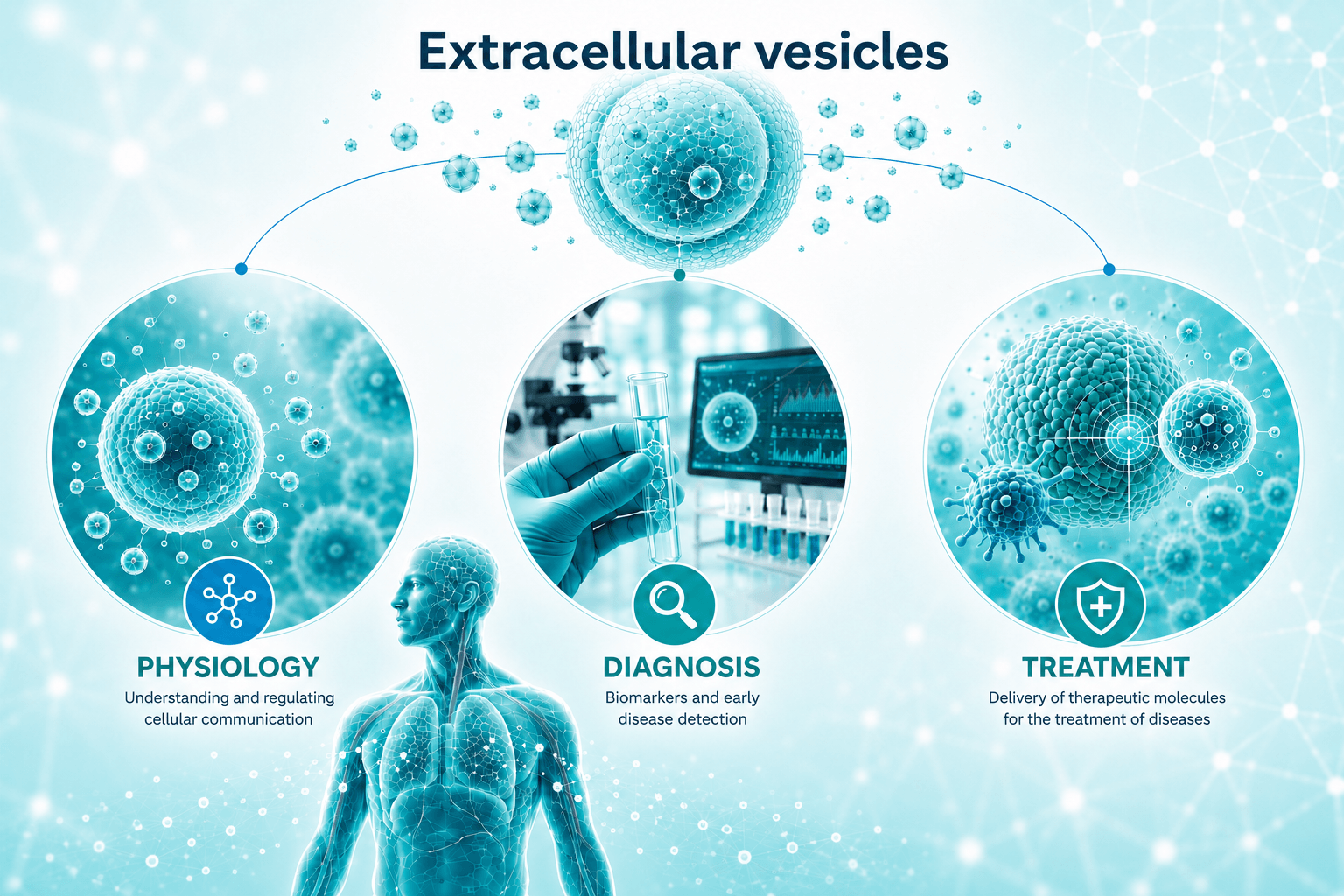
The scientific field of extracellular vesicles (EVs) has been rapidly expanding since their role in intercellular communication was first recognized. EVs are produced by all cell types (prokaryotic and eukaryotic), both constitutively and upon activation.
They are classified based on their biogenetic mechanism and size. Depending on the originating cell type as well as the type of stimulus, the differentiation of their molecular cargo, opens a multitude of research fields spanning basic and applied research, as well as clinical practice.
The variation of EVs’ cargo (lipids, proteins, RNA, miRNAs) in various conditions and diseases underscores the necessity of investigating reliable biomarkers for the early diagnosis of disease conditions such as different forms of cancer, neurological diseases, inflammation, and cardiovascular diseases, among others.At the same time, EV-related biomarkers can be utilized for the selection or monitoring of therapeutic outcomes, such as chemotherapy, novel drug treatments, and transplantations. In recent years, interest has also shifted towards the therapeutic potential of EVs themselves, as well as all technological applications related to their preparation and successful targeted delivery to sites of injury.
The study of EVs is interdisciplinary, ranging from the analysis of their biochemical and biological cargo to innovative technological applications, utilizing bioinformatics tools and Artificial Intelligence. The therapeutic application of EVs also entails the expansion of regulatory frameworks, with strict adherence to bioethical standards.
Our vision is to unite the forces of Greek scientists to harness scientific and research activities related to the study of EVs, while promoting the development and production of new knowledge and technology in these fields. Attracting young scientists and diverse specialties is a core priority of our endeavors. We believe that the collaboration between our country's Universities and Research Centers, leveraging their exceptional educational and scientific human capital, can lead to significant achievements for the benefit of research and public health, both in Greece and internationally. Collaboration and networking are key parameters in achieving the Society’s goals contributing to innovation and sustainability.
In this way, we believe that the Hellenic Society for Extracellular Vesicles (HelSEV) will become a leading hub for EV research in Greece, serving as a catalyst for productive collaborations among scientists across disciplines.
Who the Society Addresses to?
The ”Hellenic Society for Extracellular Vesicles” is open to aims to attrack health scientists, physicists, chemists, biologists, agronomists, pharmacists, technologists, and bioinformaticians, at all career stages who are engaged in research and/or professional activities related to EVs. According to the Society’s statutes (Article 4), Greek scientists conducting research or pursuing professional activities outside Greece are also eligible for membership.
Core Operating Values:
- Scientific Excellence
- Collaboration & Networking
- Transparency
- Innovation